We all know that data analysis has become a fundamental aspect for the success of organizations in various sectors. If you are passionate about data and want to build a career in this sector, adequate training for employment interviews is essential. Not only do you have to demonstrate solid technical skills, but also a profound understanding of the processes and methodologies used in the analysis of the data.
In addition to the technical skills, such as the knowledge of programming languages and data display tools, employers place a special emphasis on your ability to interpret and communicate the results of the analysis. Therefore, you will be able to transform gross data into precious information, which can guide the company’s strategic decisions. Therefore, the preparation of this role requires a combination of technical knowledge and transversal skills, essential to excel in the interviews and career of data analysts.
Does this face a data analyst?
As I have already said in other articles on data analysis, a data analyst is responsible for the collection, processing and analysis, to help organizations to make informed decisions. They use various statistical tools and techniques to interpret data and identify the relevant trends and models.
The role and responsibilities of a date analyst
A date analyst has various responsibilities, including:
Articulos que te pueden interesar 5 common errors in setting marketing goals and how to avoid them
- Collection of data from various sources.
- Cleaning and processing of data to guarantee their precision and consistency.
- The application of statistical and analytical techniques to interpret the data.
- Presentation of the results of the analysis to the interested parties, both technical and non -technical.
- Creation of reports and data views to effectively communicate the results.
- Collaboration with the company teams and IT to understand the requirements and provide relevant solutions.
Top 10 questions in an interview for the data analyst

1. Can you describe a recent project to analyze the data you worked for?
EXAMPLE OF ANSWER: «In my recent project, I analyzed the company’s sales data to identify seasonal trends. I used SQL to extract data from the database and I used Python to create graphic views. I discovered that sales were higher in certain months, which allowed the marketing team to plan more efficient campaigns.»
Our advice: Be specific in detail of the project, mentions the tools and techniques used and underlines the impact of the result on the business.
2. Which data analysis methods are you most often used?
EXAMPLE OF ANSWER: «I often use the descriptive analysis to understand historical data and the predictive analysis to anticipate future trends. Also apply automatic learning methods to identify complex models in the data.»
Our advice: Clearly explain the differences between the methods and provide practical examples of use.
Articulos que te pueden interesar How to use a discord of the Graphic Designer platform
3. How do you ensure the quality of the data you analyze?
EXAMPLE OF ANSWER: «To ensure the quality of the data, use data cleaning techniques, such as the removal of duplicates and the processing of missing values. I also implement the validation rules to verify the accuracy and consistency of the data.»
Our advice: Mention specific procedures and tools used to maintain data quality.
4. How did you use the statistical analysis of data in a previous project?
EXAMPLE OF ANSWER: «In a previous project, I used the analysis of the regression to identify the factors that influence sales performance. I discovered that price and marketing campaigns had a significant impact on sales and this information helped the management team to make strategic decisions.»
Our advice: Provides details on the statistical methods used and the relevance of the results obtained.
5. Can you explain the difference between descriptive and predictive analysis of data?
EXAMPLE OF ANSWER: «The descriptive analysis focuses on the interpretation of historical data to understand what happened in the past. For example, using pivot and graphic tables. The predictive analysis, on the other hand, uses statistical models and automatic learning algorithms to anticipate what will happen in the future, such as sales forecasts.»
Our advice: Make sure to explain the differences clearly and concisely, providing relevant examples.
6. How do you approach the collection of statistical data for a new project?
EXAMPLE OF ANSWER: «I start by defining the objectives of the project and identifying the origins data relevant. So I collect data using various methods, such as questionnaires, online surveys and data extraction from existing databases. Always check the quality and integrity of the data before starting the analysis.»
Our advice: Describes in detail the specific passages that follow and underline the importance of the quality of the collected data.
7. What software tools do you use for data analysis and why?
EXAMPLE OF ANSWER: «I use SQL to interrogate the databases, Python and R for statistical analysis and data display, and Excel for fast relationships and analyzes. I prefer these tools due to their flexibility and processing power.»
Our advice: Mentions because you prefer certain tools and how they help you carry out your activities.
8. How are the results of data analysis to non -technical parties?
EXAMPLE OF ANSWER: «I use data views, such as graphics and diagrams, to present the results accessiblely. They also prepare summary reports that explain the results in a clear and simple language, avoiding technical jargon.»
Our advice: Highlights the importance of a clear communication and the use of data views to make the results easy to understand.
9. How do you manage large and complex data sets?
EXAMPLE OF ANSWER: «I use effective storage and processing techniques, such as Hadoop and Spark, to manage large data sets. I also lard my data in an organized way and use indices and parallelisms to accelerate queries processes.»
Our advice: Explains the technologies and techniques you use to cope with the great volumes of data and their complexity.
10. What strategies do you use to keep you updated with new trends and technologies in the analysis of the data?
EXAMPLE OF ANSWER: «I started to conferences and webinars, I attend online courses and read articles and specialized publications. You also do part of professional communities in which they can discuss and learn from other experts in the sector.»
Our advice: Mentions various professional development methods and underlines the importance of continuous learning.
Tips and tricks to obtain the work of the data analyst
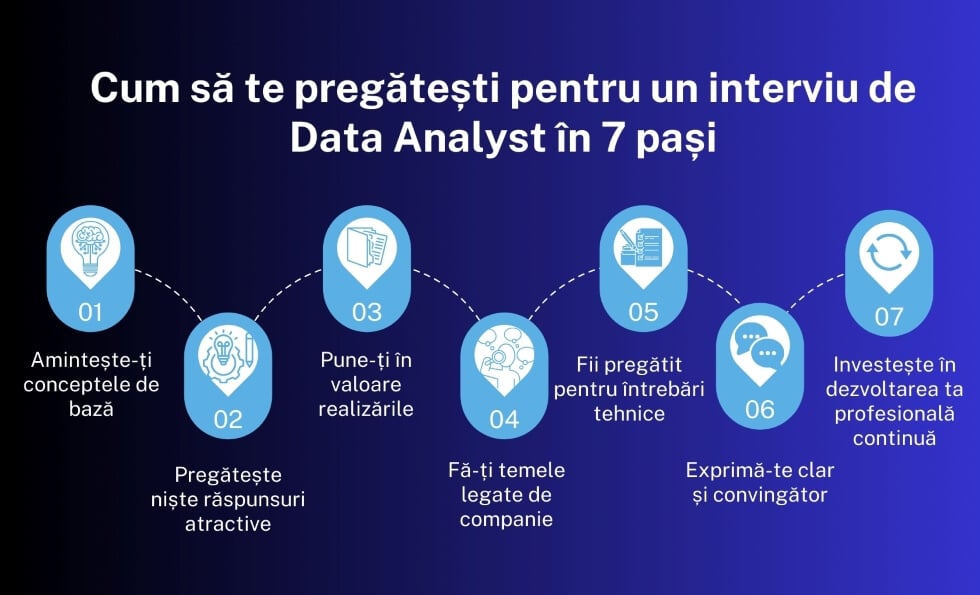
- Reviews The basic concepts: Make sure you have a solid understanding of the fundamental concepts of data analysis, including statistics and data collection methods.
- Practice answers: Prepare the answers for the joint questions of the interview and practice to feel safe during the interview.
- Update your wallet: Includes recent and relevant projects that demonstrate your data analysis skills. Make sure that each project has a clear description of the purpose, methodology and results.
Ah, and don’t forget … do you know what you might surprise for the maximum? With a short presentation of PowerPoint illustrating your professional experience and the main results to be presented during the interview. This will show that you have conscientiously prepared the interview and impress through your professionalism. You can find a multitude of online models on platforms such as:
- Canva
- Photoshop
- Range
- Slidesgo
- Google slide
- Discover the company: Documented on the company that applies, including its projects and challenges. This will allow you to better answer questions and show that you are really interested in the position.
- Prepared for technical questions: Wait to be tested on technical skills, including your knowledge in relevant programming languages.
- Develop your communication skills: Be able to explain the technical concepts clearly and accessible for the non -technical public.
- Update your knowledge: Stay updated with new trends and technologies in the field of data analysis through online courses, articles and participation in profile events.
Our conclusion?
With the right formation, determination and a strategic approach, you will excel in this interview. Do not forget to show your passion for data and analysis and demonstrate how you can evaluate the company you run for.
If you need further support or detailed information on the data analyst course, we invite you to contact the Newtech Academy team or explore the resources available on our site. We are here to help you achieve your professional goals.
latest posts published

Personal Branding or cult of personality?

6 Key SEO Steps Before Launching a New Website

Communicating during the financial crisis

11 good resolutions to give a boost to your 2019

It all starts with an idea

6 marketing and creativity books to read this year!

Content Marketing: Do You Really Have to Offer All Your Content?

Entrepreneurs and content marketing: 16 quotes to encourage you

9 tips to increase your blog audience!