It is necessary to consider that the feasibility of the project is important, not to mention the necessity.
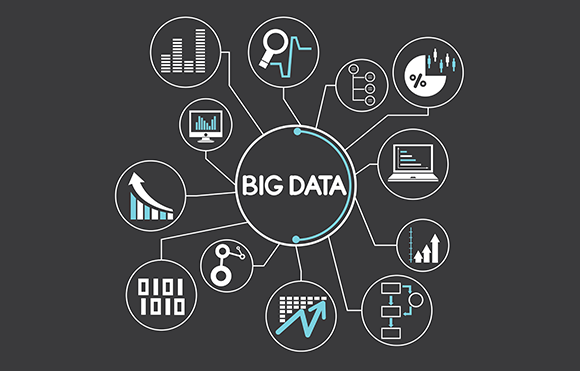
Given the large amount of information businesses generate on a daily basis, it’s a given that they need it to be stored securely and discovered quickly. And one solution is to find the support offered by Big Data. In short, this type of storage offers the user volume, speed, variety, truthfulness and value and, most importantly, all in one place. But to have all this you need to pay a price: at that moment the IT department has to bear all the costs to verify the viability of the business, since Big Data may not be viable if the result does not bring significant benefits for the company that needs more storage space.
Articulos que te pueden interesar 8 promises of innovation that the Internet of Things will bring to companies
At that time, each company’s CIOs must reconcile what big data contracting will look like with ROI. And since all types of investments take time to recover, it’s no different with Big Data. It is necessary to take into account that the feasibility of the project is important, not to mention the necessity. It is important to underline that the approval of any investment estimate in the IT field must be taken as a support in investment decisions, considering it as the most used metric to justify investments in the IT field.
Many CIOs may wonder how their job relates to budgeting or even cost awareness. In reality the ratio is not very high, but it exists. It is necessary for the CIO to have knowledge, or at least an idea, of what is happening in his department, since ROI calculations must involve everyone in the company, once the IT department provides information on costs and business contacts. A tip for CIOs is to always get certified and never say something like “this project can save us a lot of money”. Attitudes like this make it clear that the professional is having premonitions and, in a professional context, safety is the best path.
One guarantee is knowing that the Big Data solution will be able to identify faults in the company’s production processes and therefore help reduce costs. This diagnosis is made after electronically cross-referencing terabytes of data relating to the organization, allowing costs to be absorbed with inefficient processes. Naturally, if there is a corporate restructuring, an attempt is made to provide greater agility, efficiency and dynamism to the corporate management.
By reducing the costs of data analytics, you can achieve the ROI of Big Data. Thus, with data processing, companies anticipate trends, are able to see the scenario they are in more clearly and make faster decisions, obtaining a series of benefits that can be measured with the ROI of Big Data.
Return on investment
This type of storage is considered an immeasurable advance in IT, because it collects and transforms unstructured data, such as that from social networks and other sources, into useful statistics for any segment. Not to mention that the update is practically in real time. But it requires a large investment from the company, and in this sense the CIO must know all the stages of ROI. But everything indicates that the investment made for the transition to Big Data can be recovered in a maximum of 12 months. Studies reveal that companies that have implemented technology with the aim of innovating the business perform better. The reason is simple: they are abandoning large volumes of data and preferring greater speed, as Big Data technologies bring value to the business in a more agile and faster way. Those on this path have differentiated themselves and achieved better results.
Articulos que te pueden interesar Big Data Analytics as a business differentiator
It is worth remembering that ROI is an indicator used to numerically evaluate the relationship between how much was invested in storage and what the return obtained was. It is a common acronym in accounting, but recently it has started to be used by various industries, such as marketing and IT. In the specific case of measuring the usefulness of investing in Big Data, traditional ROI formulas must be replaced by indicators that are more theoretical than numerical, based on the intangibility of the benefits brought by that resource. And in this sense the CIO must be aware of all the calculations used and the investments to be made. Because today, with the competitiveness between markets, transforming data into strategic information can represent the dividing line between success and failure in the globalized business world. This is why it is necessary for the IT department to be prepared for any kind of questions when archiving Big Data and therefore be able to visualize the return on investment.
Sources:
http://www.informationweek.com/big-data/big-data-analytics/big-data-and-roi-an-uneasy-pairing-for-cios/a/d-id/1322050?
http://cio.com.br/gestao/2013/04/04/calculos-de-roi-bem-feitos-podem-ajudar-os-projetos-de-ti/
http://cio.com.br/opiniao/2014/09/30/tco-e-roi-metrics-para-investments-em-ti/
http://cio.com.br/opiniao/2015/01/19/big-data-para-onde-vai/
http://cio.com.br/opiniao/2015/02/04/investment-em-big-data-retorna-em-um-ano/
http://datastorm.com.br/big-data-roi-como-seu-investment-vale-a-pena/
latest posts published

Personal Branding or cult of personality?

6 Key SEO Steps Before Launching a New Website

Communicating during the financial crisis

11 good resolutions to give a boost to your 2019

It all starts with an idea

6 marketing and creativity books to read this year!

Content Marketing: Do You Really Have to Offer All Your Content?

Entrepreneurs and content marketing: 16 quotes to encourage you

9 tips to increase your blog audience!