We all want to be more creative. We are envious of those who throw out tons of ideas every minute. Yet, for most of us, over time we give up being one.
When we start our careers, we are often very excited about what lies ahead. We want to test ourselves, take the world by storm. We approach our managers every morning with great new ideas. Obtaining validation of an idea seems to be just a question of statistics: the more you propose, the greater the chance of obtaining a positive result. But beyond the statistics, it’s the art of pitch which can convey more ideas.

Ten years later, we’ve experienced our fair share of challenges and setbacks. We always try to stay positive, but we’ve become more careful about trying out new ideas before taking bold steps. We might share an original YouTube video with some team members to see how they respond. If they say it’s enjoyable but totally impractical for our field, we remove it from our options. We shifted from brainstorming very imaginative ideas daily to having somewhat interesting ideas every six months.
Articulos que te pueden interesar Optimize your SEO in 6 essential tips
After putting in two decades in a steady job, we prefer to think things through carefully. Generally, we’ve lost the wild side to adopt a wiser and more thoughtful approach to our work. At this stage, we might only introduce a genuinely new idea about once every two years. Even then, it’s usually a variation of what we’ve done in the past. For sure.
Does this resonate with you? Not everyone is like this, but Senior Content Marketing Managers (and creative roles overall) tend to be more cautious compared to their younger peers.
It’s not that content marketing experts run out of ideas. We have countless of them! And it’s not that our ideas aren’t good. It’s just that for many years we’ve been led to think we aren’t creative by rejecting our thoughts too often. Hearing “no” repeatedly can really stifle our imagination.
Find out how to present your content marketing ideas effectively
Our ideas are not bad. But often the way we present them doesn’t do them justice.
Articulos que te pueden interesar Guides for budding Community Managers!
Here’s how most of us come up with a new idea:
YOU: I have a great idea! Redbull publishes a magazine (The Red Bulletin) every month and their success is enormous. We need to create our own magazine!
Your boss: Are you kidding?
A list of topics will follow to quench your enthusiasm:
- We’re not RedBull, we don’t have their marketing budget
- This will never work in our industry
- Our products don’t arouse the same enthusiasm
- And a lot of other excuses for not testing a new and creative idea,…
Every idea needs support if it wants to produce something. The problem is that we don’t know how to create excitement during the pitch of a new project.
A successful creative presentation produces three results:
- The field takes you on a journey. A well-crafted presentation takes your audience on a journey towards your idea. This presentation begins by introducing your inspiration through a story. If you present your idea without packaging it well, it will be too crude to be of value. Take them on a journey and conclude by explaining how the idea can be implemented in the real world.
- The presentation connects your idea to the brand. Start with the experience that brought the idea to life, then connect the dots to connect it to your brand.
- The tone triggers anticipation. An effective presentation demonstrates the scope of possibilities and sparks excitement about the future. Trailers have this effect. And if we want to be able to launch new ideas we must produce the same effect. I like to give the audience a moment to explore for themselves the possibilities offered by the idea I just presented. They monopolize the project and, believe me, there is no better strategy than making them believe that the idea came from them.
The process for a successful presentation
We have seen above the reactions and emotions we want to provoke. But we still need a precise process for constructing arguments that stimulate these responses.
Learn to master this process to successfully present your great ideas anytime, anywhere.
- Start with an observation. When you start your presentation by sharing what you’ve observed in the world, give people context. You help them understand where your inspiration comes from. It’s an experience your audience can relate to.
- Deepen your observation. Delve deeper into your observation, what did it inspire in you? We are in the field of empathy, let your thoughts emerge so that everyone can understand it, identify with it and take ownership of it.
- Connect it to your brand. Connect the dots between the heart of your observation and what it means for your brand. This way you will give people a clear vision of how your idea can influence the work of your company.
- Explain how your idea was generated. To abruptly raise an idea is the certainty of meeting with categorical rejection. People need to be prepared to receive an idea. A new idea always causes resistance, and most people don’t like change (even when they say otherwise). When you create this journey, tell the story of how your idea was born, from observation to relationship with the brand, you will be able to demonstrate why your idea matters and how it can create value for your organization.
The successful presentation process in action
Let’s go back to the idea above: RedBull publishes a magazine. We also have to publish a magazine! Do you remember that our leaders responded to us with a thousand arguments?
Here’s how to present the same idea using this four-step process:
Observation
«The other day, I was leafing through the Red Bulletin magazine in my doctor’s waiting room and I noticed that it offers really relevant content for fans of thrills, extreme sports, etc. There are in-depth articles, interviews, reports. We talk about music, sports, cinema in a very masculine style and adapted to their target. »
Deep
“As I looked at the few numbers spread out on the coffee table in the waiting room, I realized that Red Bulletin is a great way for RedBull to build communities. It gives them a tangible connection to people in a format they can take with them anytime, anywhere. Plus, there’s also a website, an app,…”
Relation
«It made me think of a similar project in the context of our brand. In the healthcare industry, there are so many people who are not at the computer all day. And reading on a smartphone remains difficult and unpleasant. I see a great opportunity to build a community around our brand. And in a way that our competitors so far neglect! »
Put into production
“This is how I came up with the idea for a print magazine for healthcare professionals. A fun and informative magazine that would relieve some of the pressure they feel every day at work. It would feature interviews with unique players in the industry, those who aren’t like everyone else. We would only publish it every two months, so that readers have time to read it and look forward to the next issue. This pace also gives us time to put together high-quality content for our readers. A careful timeline, a appropriate tone and particular care at every stage of the creative process will reinforce what we want our customers and potential customers to think of our brand.»
This proposal is much more convincing, isn’t it?
Read also: How to overcome the fear of speaking in public
The right tone for creative confidence
By following this simple process, I don’t guarantee you a «yes» to every new proposal, however one thing is certain: you will generate reflection in your audience and your idea will be considered more than out of hand. The more support and positive thinking you find around your ideas, the more confident you will be in your work. Success breeds success.
Once you get into the habit of presenting your ideas this way, you’ll realize that success depends not just on extraordinary inspiration, but rather on perfecting the presentation process over time.
You’ll soon be as excited about coming up with creative ideas as you were in your first year on the job.
latest posts published

Personal Branding or cult of personality?

6 Key SEO Steps Before Launching a New Website

Communicating during the financial crisis

11 good resolutions to give a boost to your 2019

It all starts with an idea

6 marketing and creativity books to read this year!

Content Marketing: Do You Really Have to Offer All Your Content?

Entrepreneurs and content marketing: 16 quotes to encourage you
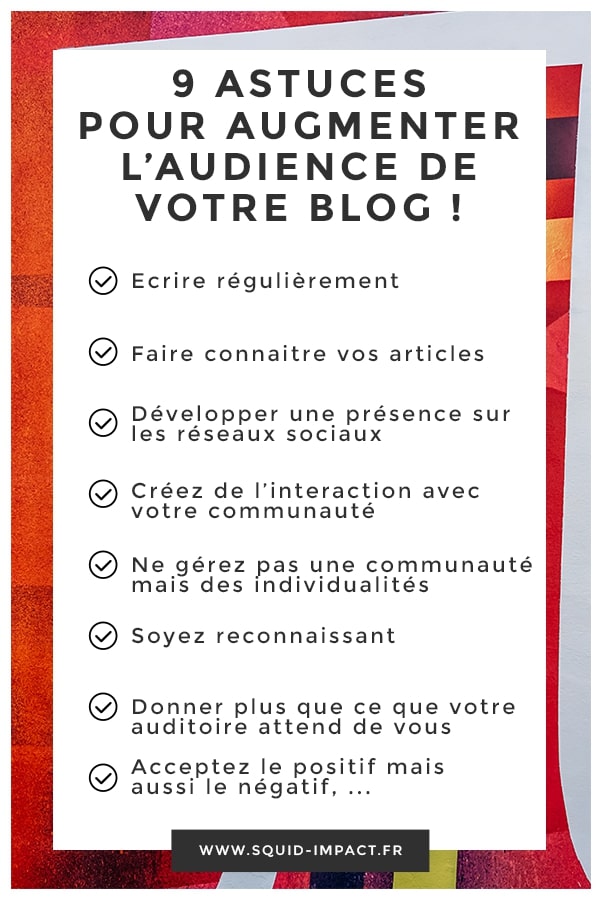
9 tips to increase your blog audience!